
Film Trick
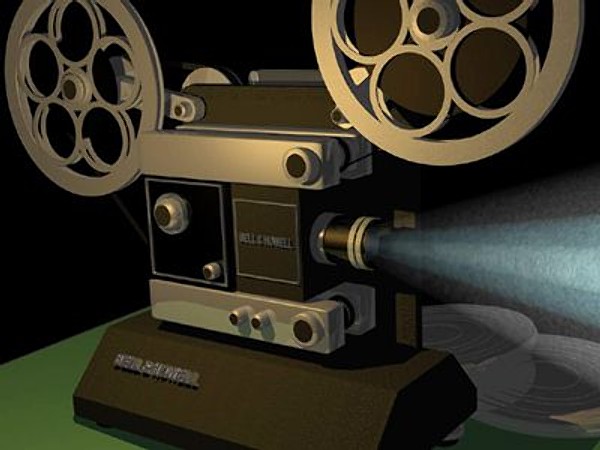
Movies typically entertain us. The creativity of movie-makers can create such a thrill for their viewers, not least in the area of the occasional stunts that are done in some movie genre. They typically leave viewers on the edges of their seats, with a desire for more action. Over the years, the term “film trick” has come to refer to something in a movie that is extraordinary – often a stunt or some other creative effect.
There are more film tricks in movies than what the average person would imagine. Some of the content of the movies we see aren’t as realistic as they appear. In fact, a lot of what thrills us is not real though it appears to be. What do I mean by that? Film tricks are manipulations of the natural, done to create an effect, to achieve a purpose envisioned by a producer. In the same way that some obvious film tricks are done in order to create an impression on you, some that aren’t obvious are also done with a similar intention or at the least, an effect is achieved, whether or not it is a part of the original plan of the producer or director.
The influencing ability of what we experience is quite enormous. The human mind learns easily – it readily receives and absorbs information, starting from childhood. John Locke, a philosopher, said, “Humans are born with a blank slate; where one’s environment has the ability to shape their mind and experience”. The validity of the statement has been debated by some but there is some truth to it. As we have lived over the years, we have become what we believed, how we thought, what we decided and how we acted towards people and our environment. Observing history and comparing the lives of people in the past with the lives of people in the present will reveal a difference linked with their environment and sources of influence.
As time has rolled by, discoveries and inventions of various types have been made. In addition, the world has gone through series of changes in systems, with the increase of knowledge, discovery, industrialisation and modernisation. If you consider Hollywood, you would find that a movie made 40 to 50 years ago would be less intriguing than one made more recently. When it was originally made, it may have been outstanding but with the developments that have taken place over the years, such a movie would have lost some of its lustre and maybe even become laughable. Why would people today laugh at something that was perhaps thrilling several years earlier? Expectations have evolved as new standards have been set.
Right from childhood, we tend to practice what we see older ones do. Whether on- or off-screen, children learn by repeating. Sometimes it’s what they see their parents do or it’s actions or statements from a cartoon, drama or another video or audio activity. This continues unto the point of maturity though older ones would be more selective. Movies depict and teach and their messages have a great effect on their viewers. A romance movie, for example, may depict something as true love where a married man leaves his wife for another woman on the claim that he is no longer in love with his wife or because life with his wife is not as enjoyable as he desires. With such a movie having an end where the new relationship is shown as successful, a subtle psychological message may be sent to viewers, suggesting that one’s personal happiness is a good reason for abandoning a marriage. In other words, the movie may cause its viewers to think that irrespective of marriage vows or the grief that comes with a broken marriage, as long as one has a strong feeling of exploring a romance with someone new, one should go for it.
The messages from many of these movies are really subtle but strong. Over time, their effect will be felt strongly. Film tricks. Full of make-believe ideas, they sway us from reality. Now, unlike the movie stunts I mentioned originally, which are not necessarily harmful though they aren’t real, some movie makers provide dangerous entertainment for their audiences. The pornographic ones are an example. Today, a lot of unwholesome sexual acts are portrayed in completely erotic movies. They thrill their audiences and offer them the promise of exciting sexual encounters. Sadly, their viewers would not know that apart from the fact that some of the actors are not as happy as they are depicted to be, the scenes acted out are sometimes done under the influence of illicit drugs.
Some pornographic actors are not as happy as they are made to appear. They endure the pains and dangers of abused sexual organs and many more physical and psychological issues. In the end, because it is a job that they are doing, which they are paid for, they continue doing it for the money. They earn their living from recorded sexual performances. However, one must recognise that some pornographic actors simply enjoy what they do and may not have a need for the money earned through that lifestyle. Why classify these movies as film tricks? That’s because although they may not have visual or audio manipulations characteristic of some action, science fiction movies or those of other genre, they largely trick the minds of their viewers. They cause them to crave what appear to be thrilling sexual experiences even though in reality those things may be different from what the movie projects because the people involved in the sexual act may not be having as much pleasure as they are made to appear to be having.
Is it a film trick? Yes and No. Based on my definition earlier it shouldn’t be, because there is no manipulation of the natural. They are real people really carrying out an act that is recorded, right? But if you look deeper into it, it has played a trick on your mind, on what is acceptable in having a pleasurable sex life or one “made in heaven”. On the other hand, the people acting the roles are not necessarily deriving pleasure in it but are probably making a living through it. Such actions are sometimes stimulated with drugs, added with other things that make them active and charged with an endless desire to want more.
40 to 50 years ago, some sexual activities that are acceptable today were not to be imagined. They were abnormal, to say the least. Today, some people want those activities done between them and their spouses. For some people, their marriages would be incomplete without them. Why would those condemnable sexual acts be acceptable for many today? It’s not hard to imagine – acceptance occurs over a period of time. What might be disgusting at first glance could become desirable after one has been exposed to it for some time. Allowing oneself a second view of such sexual activity would typically open oneself to acceptance. It would bring about a new normal – the acceptance of the abnormal.
Another case that demonstrates the power of movies and their ability to influence is the use of profane language. While there are many vile words that have always had negative connotations, some of today’s vulgar words were not always negative. The popular use of those words to connote negative things gradually led to their adoption of new meanings such that their original meanings became largely insignificant. I did a research on the history of some present-day vulgar expressions. While the histories of some of those terms are hazy, my study revealed that many were originally not used to degrade or offend people but through popular media, their extensive use for negative connotations earned them the status of vulgar. Popular media led many to adopt the negative connotations of those words as their substantive meanings, thereby influencing policies to be made for censorship of those words. Some of such words are those spelled, “F-U-C-K, S-H-I-T, P-I-S-S-E-D and H-E-L-L”. If the practice of using everyday normal words for profanity were to continue, what would become of today’s decent words and expressions?
Though the history of few of these words could be traced as far back as the beginning of time and others lack the recorded history of its first usage, it is safe to say that the extensive use of it in a bad connation was escalated profusely by the media & entertainment Industry, which has influenced the usage of such in public, whereby bringing up laws to censor such.
The censorship of vulgar words, rather than cause them to become unpopular, sometimes further helps in entrenching their use because by nature, many people like to use vulgar expressions. People sometimes like to use the words that would cause the most harm to their opponents so where there is verbal assault, such words would likely hit it hard in a negative way to the person receiving it. I’m not in any way making a call for the removal of vulgar terms from censorship. I’m instead making a case for caution in what is openly presented to people. Our movies don’t have to be filled with vulgarisms and pornography before they can be enjoyable. Entertainment should be decent. Whatever the nature of content we give our audiences, it should be something that we can be openly proud of – something that would not go against the tenets of love and dignity, for decency and respect for God and the human person. If the abhorrence we allow today has such a profound influence on our minds in the long- and short-term, imagine what influence they would have on the minds of our young and unborn generation?


Leave a Reply