
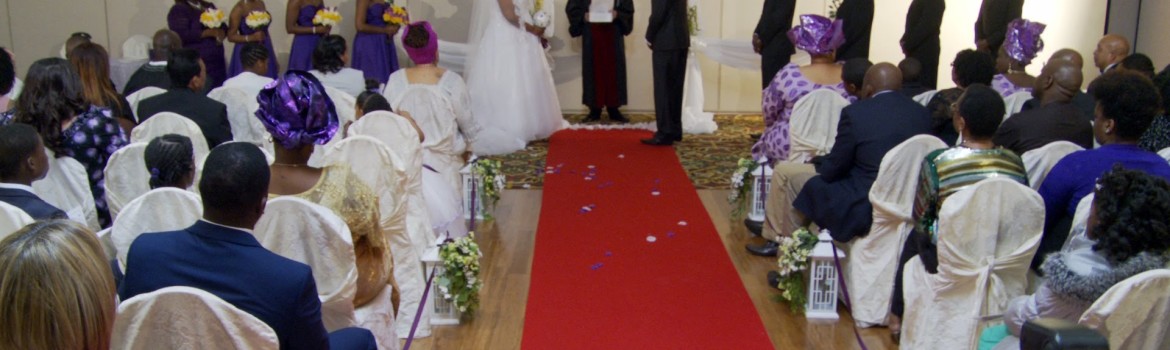
Wedding Ceremony
Bode watched as the celebration came to an end. The eating, drinking and dancing was finally over. In a matter of minutes, an event that took months and millions of Naira to plan was over. Was it worthwhile? Was it reasonable to spend so much on a wedding when, after a few years, disagreements would begin to rock the boat? After all, couples had a tendency to separate after a few years, with complaints that they were not getting what they expected from their relationshipsor citing the popular “irreconcilable” differences. These thoughts raced through Bode’s mind as he imagined the wedding spending culture that he had known almost all his life.
It was typical for people to put a lot of effort into planning their weddings but this town was particularly known for it. The focus was hardly ever on the couple building a life together. It was mostly about meeting certain expectations for the wedding ceremonies; what food was to be available, which musicartistes would perform at the reception and so much more. Basically, the wedding ceremony was more about impressing the wedding guests. The finer and more important details, including the implications of living with a spouse, seemed to be on the back burner, not the front.
Marriage ceremonies in this town were comparable to placing several people in a room, to compete with each other; they were battles to outdo someone else. People benchmarked their wedding ceremonies by standards that they felt would be expected of them by others. Everyone just wanted to impress everyone else. These ceremonies were like shows; the goal seemed to be to look better than someone else; to have a grandiose display. For an outsider, it might be an obvious error in values but in this society it was ingrained in the thinking and it was not considered reasonable to think in a different manner. Even children there learned early that it was important to put up an impressive presentation during a wedding.
Bode’s thoughts were born from his personal experience and they came to mind as he observed the lavish details that had gone into the wedding of his friend, Jide. Bode’s own wedding, though quite expensive, was not as glamorous as Jide’s. A few weeks earlier, Jide had successfully sealed a deal with an oil-services company. The deal had fetched him scores of millions of Naira and so Jide was more than happy to spend a much larger sum of money on his wedding. His bride, Alero, was really decent and homely, as Jide had insisted, but in view of his own personal experience, Bode didn’t think that spending so much on the wedding was reasonable. “It’s once in a lifetime!” Jide had said some days earlier, when Bode cautioned him about the growing expenses. That was a normal expression in the town but Bode no longer saw wisdom in that phrasethat he had known since he was a child.
When Bode got married, the future was not really put into consideration. He had wishes and dreams but there was no clear pathway towards them. His wedding was quite lavish. He made sure that it measured up with what was expected for an executive of his cadre, considering the past weddings of his fellow entrepreneurs. He had taken the plunge into heavy spending because it was just the expectation of everyone. He expected that, like people usually said, the future would take care of itself. The future didn’t do that, unfortunately.
Four years into Bode’s marriage seemed more like ten years of a struggle. Titi, his wife, had been out of work for almost a year. Their first child was ready for school and the fee for his class was quite high, considering the school that they chose. Their second child was a toddler but he had such a large appetite for food and he was fed from only the best baby food brands available. The cost of managing the family was very high. To add tohis troubles, Titi would nag Bode continually, from his inability to provide what she considered a reasonable degree of comfort for the family, to the fact that he spent more time outside the home than ever before, with nothing tangible to show for it. Bode did spend a lot of time outside his home but it was largely because he wanted to be away from the apparently-endless complaints of his wife. Time out with his male friends was an opportunity for him to forget the strains at home.
Bode was almost always broke. It was the usual thing for him to call on his friends for loans before his company received payments for services it had rendered. Sometimes they teased him, asking if his constant borrowing would allow them have enough savings to plan their own weddings. Bode was the only married one among them. Even though he had an expensive wedding ceremony, it now seemed silly to him that his friends would want to spend beyond their means as they planned theirs. If only he had thought carefully before his wedding; maybe he’d have defied the norm and done what was more reasonable.Some weeks before Jide’s wedding, as their clique hanged out for the usual weekend drinks, one of them teased, “Bode, prepare to welcome Jide to the club.” “A club of misery”, Bode thought to himself, as he remembered that Jide didn’t take his advice on cutting down on the wedding expenses.
Jide’s wedding finally came around. Before the end of the celebration at the reception, Bode stood up to dance and was having conversations with his different dance partners. It was his practice to make fresh connections whenever he had the opportunity, because there were always prospects for forming new business relationships at social events. Bode’s wife had left the reception venue for home, as she had to relieve her younger sister who was babysitting the children for her. An elderly man was curious to see that a married man withhis wedding ring clearly seen on his finger was dancing rather irresponsibly. The man made a decision to speak with Bode before he left, as soon as an opportunity arose.
Jide’s wedding ceremony was finally over and the expensive decorations and other props used at the wedding were being removed by some staff from the event planning company. Bode was thinking about the vanity of it all – expensive decorations and props, only for a few hours. Millions spent, just for the sake of creating a great impression for guests; guests who didn’t really matter after all. It was at that point that the elderly man walked up to Bode. He introduced himself as Mr Babalola. “Did madam leave without you?” the man asked Bode. “Yes, she had to go home for something” Bode replied. The man explained his surprise at the manner in which Bode had danced with other women at the wedding, in spite of the fact that he was married. “It’s a long story”, Bode replied. “I have some time” the man responded.
Bode took his time to explain to the man the challenges that he faced in his marriage; his financial challenges, his wife’s diminished regard for him and more. He explained that there had been a strain in the marriage and as a result, neither he nor his wife accorded the other much respect. He went on to state how his fortune had changed shortly after his marriage, contrary to his expectation. He also explained the lavish spending on his wedding ceremony.As he talked about his wife’s weight gain while he was losing weight, his hands started to shake in anger. He also informed Mr Babalola about his in-laws’ continual request for help with their upkeep in spite of their knowledge of his financial situation.
Mr Babalola smiled and shook his head gently. He asked about Bode’s preparation before his wedding, to which Bode elaborated on the plans that he and his wife made for the ceremony and the dreams that they had envisioned for their home; yearly holidays, shopping plans, the children’s education, etc. “You have much to learn”, Mr Babalola told Bode. “Life is like the lifecycle of a butterfly” he said. “It has stages. There is growth over time. You shouldn’t expect so much at earlier stages.” He continued, “Consider how you grew from childhood. Did you immediately start running? You doubtless started with crawling then you started to stand on your feet. When you became stronger and more confident, you started to walk and then started to run, with little struggle until you mastered it and did it without thinking twice. That’s how life is.”
Mr Babalola continued with his lesson to Bode. “In the same way as child development, in marriage, we are all to take small steps and then graduate to bigger ones. Otherwise, we wouldn’t make a lot of progress. Your challenge was in understanding where you were in your growing process. You didn’t consider that marriage would demand more from you financially, as opposed to the time when you were single and that has affected you greatly. You didn’t plan for the proper things. Having money at the outset could help because its lack sometimes brings problems in marriage but it isn’t the most important thing.”Bode was confused. “How do you say in one breath that lack of money can bring problems in a marriage and still say it isn’t the most important thing?”
“Money is either important or not and in my situation it’s obvious that it’s important.” Bode said. He didn’t understand how money could not be a key factor in his challenges, since the majority of the issues in his marriage stemmed from its lack. Mr Babalola realised that he needed to explain further.“For the record, happiness doesn’t start or end with money but one must admit that money helps. Nonetheless, remember that money is finite. It’s a resource that is limited in quantity. If you have a dream of living a rich lifestyle, you should plan to sustain such a lifestyle. You must consider present and future expenses, alongside your income, to be able to do that successfully. You only dreamed of a lifestyle but didn’t think about the implications of that lifestyle, to plan for it.The problem was your planning. I will tell you a story.”
“Ejike and Tola were friends. They were very close. They graduated from the same secondary school and were usually together. Seven years after their graduation, Ejike started a business and within a short time, he became rich. Having made a lot of money early in life, he reasoned that the next step was to get married. On the other hand, Tola’s business yielded very little but he made do with it. Over time, especially because of the distance between them, Ejike and Tola saw and communicated with each other less often.”
“Ejike thought he would never experience misfortune. His business was in importation and sale of all sorts of drinks; alcoholic and non-alcoholic; high-end and low-end brands. He chose to stick with what he believed was a winning business and business formula. When advised to diversify his operations, his usual response was, “Ndi mmadu ga na anwu mmaya, ma mmaya diri…ma ahia na aga aga”implying that people would keep drinking once there was alcohol and so business would keep growing.Everything Ejike did was in grand style. His wedding, home, cars, his children’s education; everything he was associated with was exquisite. Sadly, things didn’t continue that way for long. Ejike’s competitors swiftly took over most of his business clients, offering better prices and other incentives. He was unable to pay his staff regularly and they started sabotaging his business by short-changing him and stealing his products. In the end, he accumulated so much debt that he sold his luxury cars and the mansion that he lived in. He also sold the two plots of land that he owned.”
“Ejike eventually died after he suffered a stroke. He had become hypertensive, following his severe loses. His wife was a housewife and so she was unable to complement his income. Ejike had managed to buy a tricycle with which he engaged a hired driver in commercial transportation after he had sold his vehicles but the arrangement was a disaster, as he experienced many loses all through his engagement with the driver. Every week, there was always at least a case of trouble with the police, traffic officers, repairs or some other issue. “What happened to Tola?” Bode askedMr Babalola. “Tola realised the reasons for his slow business growth and worked hard at increasing his income. He got married five years after Ejike but he was better prepared. He eventually had four children and obtained a PhD after a short while.”
“Do you know the difference between the two friends?” the man asked Bode. “Planning, I guess!” he responded. Mr Babalola smiled. “One was organised but the other wasn’t. Tola had a vision and planned towards it but Ejike was short-sighted. Ejike expected that his circumstances would not change and so he didn’t plan. He just consumed all that came his way. Son, whatever you have before marriage will be as nothing after marriage if you don’t plan for the future. There are many other issues though and as challengescome your way; financial and otherwise, you would have to be patient with the behaviour of your spouse and you’d have to do your best to bring out the best in them. After everything,you’ll find it will be worthwhile. You complained about your wife gaining weight while you lost weight. Women tend to gain weight after marriage. It happens with men too. It’s a fact you have to live with. Exercise and good diet practices help but there’s that tendency.”
“Could Ejike’s and Tola’s story be real?” Bode finally asked Mr Babalola. “Of course; it happens all the time. Young man, think about these things, while there is still time to better your situation.” Mr Babalola stood up to leave. He shook Bode’s hand. “All the best son.”Bode was happy to shake his hand back; he had been armed with very important information. “Thank you very much, sir”, Bode said. Mr Babalola smiled happily as he walked away. One of the ladies who Bode had danced with earlier walked up to him and asked, “What did Prof.say to you?” “Who?” Bode asked. “The influential Prof. Omotola Olusegun Babalola; the old man you were chatting with…What did he say to you? He’s always giving people advice”. “Oh him?” Bode responded, as he stood up to leave. “You didn’t ask for my phone number” she said. “That’s true”, Bode replied, as he began to walk away. “I have to leave now”. “Is this how you would treat a lady? You didn’t even allow us get introduced” she responded. “I’m sorry”, he replied. “I’m Bode Adetiloye, a happily-married man and father of two. I need to get home to my wife. What’s your own name?” “Ah!” she responded, angrily. “Prof. has done it again!”
Written
By
Ikenna I. Anyadike
Edited by
Chukwudifu Onianwa of ChuDifu Projects


Leave a Reply