Educational Disaster 2

My last pen stopped at the fifth point on things to watch out for in having a good educational system. The four points that were stressed on in part 1 were: getting knowledge, having morals, learning etiquette, creating synergy and being hardworking. If schools lacks most of these traits it will be quite difficult  for the community to survive yet alone thrive…

Educational Disaster


Nigeria is one of the most populous Nations in Africa and yet she has not produced numerous inventors, scholars and learned thinkers to unveil the mask of illiteracy in the country. As ironic as it may sound the country has her citizens that leave the country boundary with the same brain, skill, potential as when they were in their country but they yield better result and great achievement that attracts the attention of different kind of people

Principled Man

Phil Denaro loved organisation. Some may say he was a perfectionist but he was just very principled. He liked order and reliability. He took words and assurances seriously and easily took offence when promises were not kept. Sadly, because of the imperfect nature of people, Phil was often disappointed by those around him. It was difficult for him to trust people in whatever he was involved in because disappointments were typically the end result.

Phil constantly observed people around him. He wanted to know those who were dependable. He wanted to live at a standard above of the unprincipled people he had around him. He observed elders, his fellow young men and women, and several other groups but he was disappointed in all of them. Phil was particularly saddened whenever elders disappointed him. It left him so gloomy that it would have been better if he did not have any expectations of them beforehand. Among his fellow men, those who seemed slightly different from the majority were actually people who were trying to improve on themselves but in his experience, most of those people had perfectionist tendencies. Phil also considered females in his search for principles. He found that most of them were pursuing perfection but it was driven by many things that could be diverted by circumstances and scattered by minor issues.

On his 18th birthday, Phil decided he would go to a school in a different city. He applied to, and gained admission, at different universities. He became confused as to which would be the right one to register with. Phil searched internet sources to get some information on expectations at the various schools where he had applied. He could not find anything helpful. Unfortunately, the school brochures were not helpful either. He settled for a generic research into the cities where the schools were located, with the hope that the cities would reflect life in the school. He considered the crime rate, as a major indicator of the state of the environment. Greenville University was his final choice. Its students looked respectable and the school seemed principled. Everything seemed to be on course towards giving Phil the sort of environment he wanted but things proved to be more complicated than he expected.

Students in Phil’s school were drawn from diverse backgrounds and cultures. Their values were usually miles apart. Jack Henderson, who Phil met in school, was however different from the majority. He was from a religious home, where virtues were upheld. Jack’s lifestyle and actions were in sync with his acclaimed values. He was also disciplined. The relationship between the pair was great. They were a perfect team, appreciating what they each stood for. They were like peanut butter and jelly spread on sandwich and they happily did many things together.

One day, Phil was eating a sandwich as he walked down the road with Jack. Jack looked disgusted so Phil asked, “Are you okay? You’re looking at me awkwardly.” “It’s nothing much; just you and the sandwich”, he replied. “What’s wrong?” “It’s awkward to eat while walking on the road. It’s making me uncomfortable. I can’t eat on the road, even if I was dying. It’s just not right; it’s not me.” Phil immediately wrapped up the sandwich and took a drink of water. They continued towards their destination. Phil decided not to ever again eat on the road since his friend and some others might consider it improper. Two weeks later, as he and Jack walked down another road while working on a business class marketing assignment, Jack asked for a break. They strolled towards a tree. When they were under it, Jack pulled a sandwich out of his bag, split it in two, handing one half to Phil. When Phil had received his half, Jack started to chew on the other one. Phil was confused.


“Are we eating in the open?”, Phil asked Jack. “Yeah, I’m famished and was about to faint. What’s up?” Jack responded. “Hmmm!” was all Phil could say. “Is there a problem with that?” Phil rushed to answer as if he was yearning for the question. “You said you could never eat on the road, whatever the situation; not even if you were dying but now you’re eating voraciously as though there’s no tomorrow.” “This was a life and death situation, bro! Rules are meant to guide, not to enslave.” Phil was disappointed. He felt betrayed. Jack had proven to be less dependable than Phil had supposed. Jack’s defence for his behaviour was inexcusable; it only made matters worse”. Phil did not see it that way. He felt betrayed. Weeks earlier, he had adjusted his behaviour according to his friend’s preferences. To have the same friend attempt to justify his own similar behaviour, trying to dismiss it, was beyond him.

The next day, Phil convinced Jack of the importance of being able to be held up to one’s words. They agreed to keep each other in check in the future. If anyone between them did not live up to expectation in keeping to his word, the other could punish him. Jack initially did not like the idea but agreed to it when he considered it could help him be more trustworthy. The young men developed their friendship more and continually strengthened themselves and indeed became better for it. Throughout their time in school, they encouraged each other in the face of challenges that resulted from the stress in the school environment. They used phrases such as “You can do it” or “Let’s keep moving” were some common refrains between them when one of them had a difficulty with something.

They celebrated their graduation with a deep sense of fulfilment because they considered their student phase as an important one in their lives. Their private celebration lunch took place at Bruns Steak House Restaurant, which was said to serve juicy steaks and other mouth-watering meals. They were in the company of other friends.

Phil, Jack and their company of friends waited quite a while to be served but no one walked over to them. It was very busy – there were people entering and leaving at a fast rate. Some were regular customers. Others were students from the school and their visitors who came on occasion of the graduation. After a long wait, when frustration had set in, Phil made a complaint to a waitress who he saw attending to some other business. She didn’t listen but walked away hastily, without as much as an apology or an appeal for understanding. It seemed she saw Phil’s complaint as the whining of a baby crying for breast milk. Another waitress walked up to their table and commented, “It gets really busy here on days like this but we got it all under control. How may I help y’all?” She could have done a better job to communicate that the delay was not deliberate. The young men placed their orders and the lady disappeared to attend to their requests. After waiting for over an hour in total, the food arrived. It looked unpresentable; sloppy and uninteresting and it definitely tasted ordinary. It was not worth the time spent waiting. The young men left the restaurant. They were disappointed. Phil immediately vowed to himself that he would not eat there. His friends, on the other hand, did not express any reservations against eating at Bruns.

It was five years after their graduation when Phil and his friend’s had their reunion get-together. They had it coincide with the school’s homecoming week. The young men had all gone their way, doing jobs in different parts of the state and country. Phil and Jack had been in touch with each other all that time. Most of the friends were able to make it to the reunion; seven out of ten. Jack did not make it, unfortunately. He had made plans for the journey but got assigned an important task at work a few days to the date. The young men’s gathering brought back beautiful memories of the past. They reminisced their times together – times when they played football, participated in talent shows and evening balls. The young men exchanged business cards and decided to end their get-together over lunch on the afternoon of the end of the homecoming week. Where would they have lunch? Bruns Steak House Restaurant? At the thought of the place, Phil recalled the disappointment he and his friend’s had five years earlier. The memory seemed not to be even slightly less bitter. His friends agreed on Bruns Steak House. “Have they forgotten the events on their graduation day?” Phil wondered. “Have they been bewitched?” Phil didn’t consider that things may have changed at the restaurant. Five years had already passed. There could have been some improvements.

Phil sat in but he did not place an order. He wanted to hold fast to his vow. He went with his friends only so that he would not be seen as the spoiler of their reunion. Phil had refused to order some food, even after some of his friends offered to pay for his meal, assuming he was short of cash. He declined their offer. His friends placed their own orders and started to eat when the food had been served. Nobody realised that Phil was plagued by the experience he had in that very restaurant five years earlier. They all ate oblivious of the matter. Another one of them, Billy, who also could not make it, would have easily drawn attention to the past experience and pointed to it as the reason for Phil’s behaviour but no one else could. If Jack had been present, he would have snapped Phil out his thinking. As the friends talked over their meal, Phil watched the waitresses, to see if they would drop the ball; make a mistake or do something that would point to the sloppiness of the place. Nothing happened. Instead of spotting something wrong, everything pointed to the service as being top-notch. The food was great, as the young men all testified.

As the men all walked out of the restaurant, Phil felt a rumble in his stomach region. He was hungry; very hungry. Phil was disappointed in himself because of the haste with which he had made his wow. The men walked towards the parking space, exchanged greetings further, made promises to keep in touch more often and then began to get into their cars and they drove away. Phil drove away also. He was really very hungry and so he decided to stop by at another restaurant along the way. He consoled himself with a thought that even though service at Bruns was better than it was at the time of his last visit, the one he was getting in that other restaurant was just as good. That was until he almost choked on a bone he accidentally swallowed. The bone was hidden in some food he placed into his mouth. There should not have been any bone in it. The restaurant manager apologised over the incident and asked for the bill to be waived. Phil however insisted on paying and left after doing that.

“Was it worth it?” The thought kept racing through Phil’s mind. What were principles, really and did they need to be very rigid? What did it really mean to be principled? Was it possible to be principled and how can it be accomplished? Phil contemplated the fact that he could actually have lost his life as a result of the bone that had gotten into his throat. Was he willing to endanger his life in order to pass himself off as a man of high principles? The problem he faced in his pursuit of principles for living was that he was the one legislating when and how to apply his beliefs. They were not necessarily fair or realistic. His expectations and standards were sometimes beyond what was rational. Rules for living are more humane when they emanate from a source and principle beyond one’s own person. In such cases, they are more realistic and livable. That is the place of God. He sees beyond people’s actions and knows their actual intentions. His own judgments are fair. Governing one’s own life on the basis of selfishness and spontaneity is not wise.

To be governed by the divine in itself is not necessarily easy. It would take a personal and intimate relationship with God, beyond mere guesses. It would take a commitment to deep fellowship. God reveals himself to whoever pursues him genuinely. Do you know God for yourself?


Film Trick

Movies typically entertain us. The creativity of movie-makers can create such a thrill for their viewers, not least in the area of the occasional stunts that are done in some movie genre. They typically leave viewers on the edges of their seats, with a desire for more action. Over the years, the term “film trick” has come to refer to something in a movie that is extraordinary – often a stunt or some other creative effect.

There are more film tricks in movies than what the average person would imagine. Some of the content of the movies we see aren’t as realistic as they appear. In fact, a lot of what thrills us is not real though it appears to be. What do I mean by that? Film tricks are manipulations of the natural, done to create an effect, to achieve a purpose envisioned by a producer. In the same way that some obvious film tricks are done in order to create an impression on you, some that aren’t obvious are also done with a similar intention or at the least, an effect is achieved, whether or not it is a part of the original plan of the producer or director.

The influencing ability of what we experience is quite enormous. The human mind learns easily – it readily receives and absorbs information, starting from childhood. John Locke, a philosopher, said, “Humans are born with a blank slate; where one’s environment has the ability to shape their mind and experience”. The validity of the statement has been debated by some but there is some truth to it. As we have lived over the years, we have become what we believed, how we thought, what we decided and how we acted towards people and our environment. Observing history and comparing the lives of people in the past with the lives of people in the present will reveal a difference linked with their environment and sources of influence.

As time has rolled by, discoveries and inventions of various types have been made. In addition, the world has gone through series of changes in systems, with the increase of knowledge, discovery, industrialisation and modernisation. If you consider Hollywood, you would find that a movie made 40 to 50 years ago would be less intriguing than one made more recently. When it was originally made, it may have been outstanding but with the developments that have taken place over the years, such a movie would have lost some of its lustre and maybe even become laughable. Why would people today laugh at something that was perhaps thrilling several years earlier? Expectations have evolved as new standards have been set.

Right from childhood, we tend to practice what we see older ones do. Whether on- or off-screen, children learn by repeating. Sometimes it’s what they see their parents do or it’s actions or statements from a cartoon, drama or another video or audio activity. This continues unto the point of maturity though older ones would be more selective. Movies depict and teach and their messages have a great effect on their viewers. A romance movie, for example, may depict something as true love where a married man leaves his wife for another woman on the claim that he is no longer in love with his wife or because life with his wife is not as enjoyable as he desires. With such a movie having an end where the new relationship is shown as successful, a subtle psychological message may be sent to viewers, suggesting that one’s personal happiness is a good reason for abandoning a marriage. In other words, the movie may cause its viewers to think that irrespective of marriage vows or the grief that comes with a broken marriage, as long as one has a strong feeling of exploring a romance with someone new, one should go for it.

The messages from many of these movies are really subtle but strong. Over time, their effect will be felt strongly. Film tricks. Full of make-believe ideas, they sway us from reality. Now, unlike the movie stunts I mentioned originally, which are not necessarily harmful though they aren’t real, some movie makers provide dangerous entertainment for their audiences. The pornographic ones are an example. Today, a lot of unwholesome sexual acts are portrayed in completely erotic movies. They thrill their audiences and offer them the promise of exciting sexual encounters. Sadly, their viewers would not know that apart from the fact that some of the actors are not as happy as they are depicted to be, the scenes acted out are sometimes done under the influence of illicit drugs.

Some pornographic actors are not as happy as they are made to appear. They endure the pains and dangers of abused sexual organs and many more physical and psychological issues. In the end, because it is a job that they are doing, which they are paid for, they continue doing it for the money. They earn their living from recorded sexual performances. However, one must recognise that some pornographic actors simply enjoy what they do and may not have a need for the money earned through that lifestyle. Why classify these movies as film tricks? That’s because although they may not have visual or audio manipulations characteristic of some action, science fiction movies or those of other genre, they largely trick the minds of their viewers. They cause them to crave what appear to be thrilling sexual experiences even though in reality those things may be different from what the movie projects because the people involved in the sexual act may not be having as much pleasure as they are made to appear to be having.

Is it a film trick? Yes and No. Based on my definition earlier it shouldn’t be, because there is no manipulation of the natural. They are real people really carrying out an act that is recorded, right? But if you look deeper into it, it has played a trick on your mind, on what is acceptable in having a pleasurable sex life or one “made in heaven”. On the other hand, the people acting the roles are not necessarily deriving pleasure in it but are probably making a living through it. Such actions are sometimes stimulated with drugs, added with other things that make them active and charged with an endless desire to want more.

40 to 50 years ago, some sexual activities that are acceptable today were not to be imagined. They were abnormal, to say the least. Today, some people want those activities done between them and their spouses. For some people, their marriages would be incomplete without them. Why would those condemnable sexual acts be acceptable for many today? It’s not hard to imagine – acceptance occurs over a period of time. What might be disgusting at first glance could become desirable after one has been exposed to it for some time. Allowing oneself a second view of such sexual activity would typically open oneself to acceptance. It would bring about a new normal – the acceptance of the abnormal.

Another case that demonstrates the power of movies and their ability to influence is the use of profane language. While there are many vile words that have always had negative connotations, some of today’s vulgar words were not always negative. The popular use of those words to connote negative things gradually led to their adoption of new meanings such that their original meanings became largely insignificant. I did a research on the history of some present-day vulgar expressions. While the histories of some of those terms are hazy, my study revealed that many were originally not used to degrade or offend people but through popular media, their extensive use for negative connotations earned them the status of vulgar. Popular media led many to adopt the negative connotations of those words as their substantive meanings, thereby influencing policies to be made for censorship of those words. Some of such words are those spelled, “F-U-C-K, S-H-I-T, P-I-S-S-E-D and H-E-L-L”. If the practice of using everyday normal words for profanity were to continue, what would become of today’s decent words and expressions?

Though the history of few of these words could be traced as far back as the beginning of time and others lack the recorded history of its first usage, it is safe to say that the extensive use of it in a bad connation was escalated profusely by the media & entertainment Industry, which has influenced the usage of such in public, whereby bringing up laws to censor such.

The censorship of vulgar words, rather than cause them to become unpopular, sometimes further helps in entrenching their use because by nature, many people like to use vulgar expressions. People sometimes like to use the words that would cause the most harm to their opponents so where there is verbal assault, such words would likely hit it hard in a negative way to the person receiving it. I’m not in any way making a call for the removal of vulgar terms from censorship. I’m instead making a case for caution in what is openly presented to people. Our movies don’t have to be filled with vulgarisms and pornography before they can be enjoyable. Entertainment should be decent. Whatever the nature of content we give our audiences, it should be something that we can be openly proud of – something that would not go against the tenets of love and dignity, for decency and respect for God and the human person. If the abhorrence we allow today has such a profound influence on our minds in the long- and short-term, imagine what influence they would have on the minds of our young and unborn generation?

HUMBLE WORLD

Who is to say that there is one powerful living creature above all on planet earth? All are humbled in the world they find themselves, from the smallest to the greatest. All are really helpless, except for the Creator who has the power to alter or orchestrate things His own way.  It is often advised that we exercise toughness, be brave and not show any signs of weakness; it is a dog-eat-dog world out there and only those who are ready to fight it out will survive – survival of the fittest.

Could that really be true? Ironic as it may sound, you could be a weak creature and still be fit to remain on Earth longer than the fittest creature beside you. That is if you are not taken out by one thing or the other, be it something greater than you or something smaller.

Let’s take a quick look at the stories of some of the fittest men from historical accounts. One story that is common to most people is that of Samson and Delilah. Samson was one of the strongest men in human history. He had so much physical strength to kill 1000 men with the jawbone of a donkey; he was strong enough to loosen new ropes off himself like thread, without being possessed by any demon and to tear a lion into pieces because it got in his way. The list goes on, with the wonders that Samson did with his physical strength. As life would have it, he died at a young age. I am sure he didn’t live to see 50. How come? A female, the weaker vessel, as quoted in the bible! Delilah didn’t kill a lion, she didn’t snap any bowstrings used to subdue a person. As a matter of fact, she didn’t put up a fight but used persuasion to make Samson give up his secret after three trials. One would think that Samson should have taken note of the danger that was ahead, knowing that Delilah was testing him to know the source of his power and to use it against him. It was very painful how his end came.

Let’s look at another historical Legend. Alexander the Great – his name says it all. He was so mighty and victorious that he was feared by many and had “Great” added to his name. What did he do? He subdued nations when he took over his father as king; he never lost a battle till his death. How long was his winning conquest? Almost half of his life on earth, even at a short life span of 32years. He was a king of four great nations at the same time. He renamed multiple cities after conquering them. He was an epitome of a general; one who could lead a small army to conquer a larger one.

Alexander the Great did so much and none could oppose him; none could stop him. Neither could they get in his way – not women, money or rivals. So what ended the life of this mighty man of valour at a young age? It was a mere fever; one that a young teen could recover from, after taking one or two pills for a few days. Is that not humbling?

Let’s consider the animal kingdom where the lion is the king of the jungle. There it is feared. With its size, weighing 250kg, it can pounce on its prey and suffocate it. With its paws, it can give a blow that can break the bones of its prey. Most animals in the wild fear it but a bite or two from the black mamba brings the mighty king of the jungle down in 25 minutes or less, without much effort of fighting.

The black mamba is a snake whose venom is as dangerous as a mixture of poisons that kill in less than an hour. It looks harmless, like a creature that can’t move, but it is fast; all it needs to do is give a bite or two and its victim is at its mercy. Interestingly, black mambas withdraw from the scene at the site of army ants, those tiny little creatures that move in groups and have no respect for any living thing. Besides humans, the black mambas are also killed by the yellow mongoose, whose body weight is less than that of the king of the jungle.
The dog-eat-dog-world saying prevails in the world where we find ourselves if you look closely at nature. A spider that is seen eating a fly at one moment has a challenge when it is weak because at that point, it can be subdued by another fly and be fed on by ants. It will interest you to know that no matter how powerful many living creatures are, they are checkmated with something else, smaller or bigger, to keep them humbled, in other to realise the greater power beyond their physical eyes.

Could there be a greater being that puts us in check or is it all by accident? As you think about it, it is important to know that as small or great as you are, the strengths you have could be used to bring out more aspects of you that people might look down on and the weaknesses that you are oblivious to could bring about your downfall or take you out of this world, despite the strength you possess.

Written

By

Ikenna I. Anyadike

Edited by Chukwudifu Onianwa, of ChuDifu Projects

SPECTATORS

Odd as it may sound, many people are spectators. They know this but pretend as if it’s not the case.

Chukwugozie and Okechukwu were born to the same parents. The boys were to cause a strong revival in their community, with the help of its other indigenes. Many knew about their birth and their calling, both in their land and in the world beyond them.

Between the boys, the question of who would be the actual deliverer of their community and who would be the destroyer was contentious. Most people in the community were religious and so they got a lot of spiritual information. Their information was mostly from their local deity or from Chukwu, the creator of the universe. In order to discover which of the boys would be the deliverer, the people visited their home regularly. Though the boys were twins, they didn’t look identical so it was easy to differentiate between them. Chukwugozie was born first. Okechukwu followed. For that reason, it was first assumed that Chukwugozie was the deliverer.

Resulting from the assumption that Chukwugozie was to be the deliverer, people initially showed more favour towards him, especially in presenting gifts, with the hope that when he reigned as the deliverer, he would reciprocate their gestures in kind, possibly marrying one of their daughters. The boys were the talk of the town; people couldn’t have a conversation without mentioning either of them. As they grew, Chukwugozie began to have visions of the spiritual world. It started at the age of five and frightened him. Most times, he wondered if he was normal or whether a curse had been placed on him. One day, he saw things that were beyond his understanding so he ran to his aunt, who lived in their family house.

When Chukwugozie’s aunt heard his story and saw the fright on his face, she smiled and told him not to worry, saying that it was common in the Ndi Ofú community and that it was the work of Chukwu, to notify the deliverer and to help rescue the people from impending troubles. “Troubles?” the boy asked. “What kind of troubles?” “…Troubles that are too enormous to bear and countless in number”, replied his aunt, Nneka. “Just rest and with time you will know how to handle and use your gift for good.” Those were her words before she tucked him back in bed. She wondered if Chukwugozie could be the deliverer but as she lay down to sleep, she decided not to tell anyone; not even the boy’s parents.

Troubles! Were there really troubles? Yes, in Ndi Ofú community, there were countless problems people couldn’t mention, like ritual killings for money and power, cannibalism, fraud and all sorts of deception for personal interests, oppression of the poor masses and of the less-privileged in the society, injustice for those who sought fairness and much more. The people cried to Chukwu continually for their land to be redeemed and for Him to raise a deliverer to sustain transformation whenever it occurred.

Most of Ndi Ofú’s rulers were complacent. They cared little about the happenings in their community. Whenever they were elected, they went after their selfish desires and ignored those who sought their assistance. They denied justice to the less-privileged but allowed accused people to go free after collecting bribes that they requested. Those corrupt acts lingered and most people in the community were scared to speak out, for fear of what might happen to them if they did.

The silence of Ndi Ofú’s people was similar to sitting on the fence and watching what was unfolding. Things became so serious that their problems started telling on them. It was not just physical anymore but also spiritual. Some of the people started losing their gifts of seeing visions. Some couldn’t communicate with Chukwu freely anymore and some started practicing diabolical things to have a hold on some power. The wise ones resorted to praying in their closets for the land’s deliverer to arise.

It was quite ironic that the Ndi Ofú people; “people that see visions”, as their name implies, were going through sufferings. Could it be that they were hearing from the wrong god? The truth was that their visions and their interpretations of them were based on the states of their hearts at any given time that they were received. One could get the truth through a vision for the land or a vision for oneself, others or a particular group of people but their interpretation was determinant on whether hatred, bitterness, jealousy, selfishness, malice, lustful or other bad thoughts were lingering in their hearts. An example was the situation between Uzochukwu and Ginika, who were in a relationship. Many times, Uzochukwu would impress Ginika with some truth about happenings in their community, as revealed by Chukwu, as well as with talks on the possibilities of a future for them together. That made Ginika fond of Uzochukwu but the young man became lustful and he convinced her to have sex with him, considering that they were going to marry. After the act, he dumped her and that made the girl confused and insecure, doubting all others who approached her after Uzochukwu, whether or not they claimed to know Chukwu.

Was it that the Ndi Ofú people didn’t know what they were doing? In actual, there were three categories of people in the community: the sheep, the wolves and the wolves in sheep’s clothing. The Sheep were the innocent ones; some were knowledgeable on visions and they interpreted them for the good of people around. Some others were clueless about such. Some did their best to live rightly while others were reckless, making them instruments for evil people. The Ndi Ofú community had a mixture of such people. Most of the Sheep longed to do what was right but their fears limited them so they resorted to prayer, for Chukwu to raise a deliverer from among them.

The wolves had no fear of Chukwu; they were out for their selfish agenda. They used all sorts of things to either manipulate others to do what they wanted or to destroy them for their own benefit; they were rebellious in nature. They did not want to have any association with Chukwu or people who were committed to Him, even when they knew Chukwu was above all. They tried to rub shoulders with Him.

The wolves in sheep’s clothing were those who had ulterior motives for their good actions. They pretended to give a helping hand just so that they could get what they really wanted in the long run. They could claim to have a deep knowledge of the mysteries of Chukwu, to draw a crowd to themselves but it was all deception; they were neither here nor there; they camouflaged themselves according to what was suitable at every moment.

Chukwu, who is ever faithful, answered the prayers of Ndi Ofú. He told them about the family through which he would deliver Ndi Ofu. That was where the matter of Chukwugozie and Okechukwu came to play because their family was pointed at by Chukwu, as the one that would raise the deliverer for Ndi Ofú community’s problems. As the people watched the boys, Chukwugozie seemed more likely to be the deliverer; he was more concerned with the things of Chukwu; he was a well-behaved young lad and one who sought deep spiritual truth, unlike his brother who was stubborn and rebellious, with no care for spiritual matters.

As people spoke about the future and what might play out, it seemed they knew it all but all they knew were bits and pieces. They gathered many followers to themselves. They speculated that in the house of the deliverer, one child would be good and the other bad. Most of the good people couldn’t do much but wait for the deliverer to be revealed; they observed to see which of the boys would be good and which one would be bad. It was not easy to tell though because Okechukwu was transforming as he was coming of age.

In order not to be misguided, the Ndi Ofú people made the two boys leaders in different areas in the community. Both boys provided leadership independently. The aim was to observe them separately. If any of them declared something as a prophecy from Chukwu, the people would see if it came to pass. When one of the boys was seen to be right, the people moved towards that one as though he was the deliverer. When a prophecy made by the other came to pass, the people shifted again towards him. It happened regularly.

The wise ones among the Ndi Ofú people sought after Chukwu, rather than wait for the deliverer. The more they sought after Him, the more He revealed Himself to them and spoke to them through visions, dreams, and into their hearts. As they were guided by Chukwu, they began to teach people how to hear from Him and how to interpret visions they received from Him. It was challenging for them because they were not getting immediate results but they kept at it, believing that it would eventually yield fruit.

The influence of the bad people in the land increased and so at a point, Okechukwu stepped down from his position and went to a nearby country to learn why his community was failing, in spite of the gifts his people were endowed with. Unknown to him, he couldn’t learn or understand things from another land because his land was peculiar. The burden of leadership became too much for Chukwugozie. When most people expected more from him as the supposed deliverer, he ran away and settled in another land. There, he got married. He and his wife had children and were away from the watchful eyes of the people of Ndi Ofú.

It seemed as though all hope was lost for the Ndi Ofú people. Evil continued unabated and expanded all around the community. The only people that withstood and opposed evil were the wise ones and their followers. The Ndi Ofú people wondered among themselves whether the prophecies about a deliverer were true after all. “Did Chukwu lie? Is there really a deliverer?” they asked. Some gave in to evil practices. Some others sat back and watched. Many people either did good or bad; whichever was favourable at any moment. A few others joined the wise group and their number increased.

While Okechukwu was away, he realised there was not much he could get towards providing a solution to his people’s problems so he returned home. Upon returning, he observed that things had gotten worse and were unbearable. What could he do? He found help in the company of the wise ones among the Ndi Ofú people. They taught him a lot of things, such as how to hear from Chukwu, how to discover his gifts and talents and how to use those gifts for the good of the land. As time went on, Okechukwu gained mastery of the abilities he had acquired and he began to train his people on leadership. He told the people that Chukwu had an important role in the transformation of the Ndi Ofú community. People began to accept his teachings and to trust Chukwu to fulfil His word in their lifetime.

When it looked like their misery was over and a ray of hope was beginning to appear, the wicked people ganged up and accused the good leaders of responsibility for the problems in the community, bringing about a division among the people. It brought about a setback for Okechukwu and his followers because some gains in receiving their trust were lost with the accusations, especially among the followers who were never really sure about what to do. Those followers were not steady. They would support one person and follow them for some time but in another moment, they would change their minds.

Okechukwu collaborated more with the wise people in the land. He called on his brother, Chukwugozie, to return to the community. They worked out a plan: the wise people did what they knew best, Okechukwu continued his role of training leaders and Chukwugozie taught people on how to interpret and utilise the visions they received from Chukwu. It was a three-fold cord that could not be broken. They began to expose the wicked acts of the wicked political officials in the land, holding them accountable for their actions and removing those who were unfruitful in their jobs, especially the influential ones who got their wealth from unlawful practices. Such wicked people were questioned thoroughly.

People in Ndi Ofú began to sit up because they didn’t know who was watching them, to bring them to book. Those who would have naturally done evil began to do good and those who always desired to do good, did it freely. All like a dream, Ndi Ofú community changed for good with people marvelling at its accomplishments and how Chukwu transformed it to what it eventually became.


Written

By

Ikenna I. Anyadike

Edited by Chukwudifu Onianwa, of ChuDifu Projects



“Drop Something” Syndrome

When did soliciting for tips, and various monetary favours from strangers, become a norm? In Nigeria, the culture seems to have taken root. A customer may finish transacting business somewhere and get requests from members of staff at that location, for some form of personal gratification. It’s amazingly shameful! The people that make these requests are often salary-earners at the places where they make these shameful requests. Why can’t they live through decent means? They embarrass their employers and those customers who they trouble for those favours. It’s particularly bad in urban places like Lagos, though residents in some rural communities also engage in that disgraceful practice.


One day, I had a funny experience with that. I had just left a supermarket where I had gone to do some shopping. I was wondering if I had spent more than I should have. My concern was about having enough money for the next day. A small boy who worked at the supermarket was asked to help me take my refilled water dispensers to the car. As he finished loading the items into the car, he mumbled something that I couldn’t make out. He repeated it clearly when I asked: “Your boy dey here; anything for us?” “What do you mean?” I asked in a harsh tone. He quickly realised I wasn’t the sort of person with whom he could get away with that and so he ran off, like a child whose mum was approaching him with a cane, to flog the living daylights out of him.”


I tried to guess the boy’s age from his appearance. He was probably twelve; maybe thirteen or fourteen. At best, he would have been fifteen. To have a boy seeking such favours at such an age is worrisome. Interestingly, he couldn’t have worked at that supermarket beyond two weeks because I would have noticed him before then if he did. I shopped at that location regularly. Seeing the boy seek monetary gratification outside his salary, for work he is paid to do, is something hard for me to wrap my mind around.What a mess! What would one expect from him when he is in his twenties, thirties or forties?


The behaviour of seeking unearned gratification is spreading like wildfire. A former classmate of mine visited another African country and got a negative impression because of the frequent requests for tips at almost every opportunity. Why should our African brothers embarrass us in the view of foreigners? Does it have to get to that extent? I know that it happens because years ago, during my travels, when I went through screening at the international airport, it was normal to hear things like “Chairman, drop something for us”, “Put 100 USD inside the bowl”. I would simply smile and walk away but really… 100 USD? Are you joking? They’d expect me to hand them money they didn’t work for, just like that? Money whose source they didn’t know! Money they’d squander quickly, as they didn’t work hard for it!


The “drop something” syndrome comes in different variants. There are the executive, the business, the religious and the layman variants. Learn about these so that you can identify them when they present themselves.


The executive variant has executive beggars– salary earners who make money in addition to their salaries, through undignified means. You would find them at banks, malls, airports and restaurants, among a few. They are low-wage workers such as security personnel, waiters and various assistants. Their typical greeting is “Happy weekend, sir (or madam)!” even when it’s midweek. Occasionally, they’d say, “Big boss, your boy dey here o!” Ridiculous!


The business variant has a fraudulent base. Some people would pretend to be human resource consultants or claim to have a formal relationship with some human resource people and would attempt to scam their targets, offering them make-believe jobs and contracts. These job and contract offers are unsolicited but carefully targeted at those they believe would easily be swayed into offering money for those opportunities. One group of people that they target is those who have recently been discharged after completion of the NYSC programme. Business variant members of the drop something club would fish for names of past NYSC enrolees, using the NYSC magazines. With the high unemployment level, they would likely be successful at scamming a few of them.


This group of scam artists would lure their victims with promises of jobs and invite them for tests or interviews, to raise the hopes of their targets. Upon succeeding in drawing the attention of those ones, they would present them with an offer, on the condition of receiving some money in advance, as appreciation or money that they claim would be used to settle some ogas at the top.Sometimes they would extort such money in various amounts over a period of time, for various false causes. If their target isn’t careful, they could suck them dry before they realise that there is no job available.


The religious variant is seen with people who don’t fear God. They play on people’s emotions, positioning themselves in bus parks, claiming to be men of God; so-called preachers. As the bus is about to be full, they would get down from it and begin their so-called ministry. I say so-called because their message does not add up. They have no real message. Their aim is simply to stir emotions for their benefit, with the aim of provoking their audience to give money to them. After four to five minutes of speaking, they’d ask for an offering. This situation is prevalent in rural areas and can sometimes be seen in marketplaces.


The layman variant is perpetuated by people who seem to have studied in a school for tricksters. They are very crafty. Some of them would present themselves as common people without work or would pose as people who are stranded on the road. You’d find these ones all over the country and their chat lines are similar. There are, of course, different grade levels with these people; the lower and higher classes. The lower ones are often seen begging for alms in traffic but they have no form of physical deformity. The higher class ones are well-dressed and speak good English.


The higher class layman variant of the drop something club occurs where it is difficult to interrupt their business; in estates, houses of worship and market places, for example. Some of them have approached me in the past, in different places. Typically they’d say something like, “Excuse me, sir; please don’t be offended. I know you don’t know me from any place. I feel ashamed to talk to you about this…in fact, you are a man like me…you know how much courage it takes to talk about a thing like this…” “…some people will embarrass me; that’s why I came to you…” What would follow would be a story that culminates in a request for money because he is stranded, with no money for transportation.


Wonderful! Let’s consider the points:

“Don’t be annoyed”. Why would I be annoyed if he approached me?

“I know you don’t know me from any place”. That’s obvious.

“I feel ashamed…you are a man like me…you know how much courage it takes…” Why should he attempt manipulation in order to get his way?

“Some people will embarrass me; that’s why I came to you…” Why should he attempt to play with my emotions and patronise me? What’s special or different about me, really?


Most of these people repeat themselves. One day, I was taking a walk and one approached me. After spending time trying to sway me emotionally, I cut him short and told him to cut to the chase. He started all over, like an audio recording that was played, stopped, rewound and replayed. Amazing! I had no option than to hear his repeated whining. Interestingly, this person who claimed to be in need of transportation was not dressed as someone ready to leave for another location; he was dressed as someone who was within his environment. Even more curious was the fact that within the vicinity where he was asking for money, there was no means of public transport. It was a residential close. Was he requesting for transportation money to enable him walk into his house nearby?


Another encounter between me and a layman variant of these people was very dramatic. I was in a hurry to meet up with an appointment when he came towards me from the opposite direction. I was driving. His smile, as he approached, suggested he knew me. It seemed, at first, that he was going to warn me of impending danger. I wound the window of the car down and he cut to the chase: “I need money for transport to…” Before he could finish, I wound back my window and drove further along as traffic continued. Funny as it may sound, hours later, I saw the same guy. I wound down my window and this time gave him enough to take him wherever he might have wanted to go. Did he stop there? No. Forgive the expression but a dog always wants more meat; bigger meat. He walked up to a lady in a big SUV, to ask for money again. I hope she gave him what he deserved; a big NO!


Am I suggesting that there are no genuine and honest people going about seeking help from others? Definitely not! There would be those who genuinely use what is given to them for the purpose for which they ask. Some really are stranded and in need of help so we would do well to give assistance when we can. To however have this situation where around every corner, someone wants people to drop something,is not excusable. People should look for legitimate ways of earning an income. They should not look for easy escape routes but should use their skills and talents in more beneficial and dignifying ways. It’s unfair to make quick money by playing on people’s emotions.


Written

By

Ikenna I. Anyadike

Edited by Chukwudifu Onianwa, of ChuDifu Projects

 

Translation

Your boy dey here; anything for us – Your boy is here, acknowledge me with monetary value


Exaggerated Lies

They say, “Lightning never strikes in the same place twice” but in Bizzaria it does, at least so Bizzarians claim. For instance, if a bad incident occurred once, they could retell it several times, in the same way, as if it happened again, when it didn’t.”

Bizzarians are hardworking and intelligent. They are also known for their hospitality but they are liars. Lies pour out of their mouths reflexively. You would wonder if those lies were produced by machines in their brains. It is true that people generally lie but with Bizzarians, the depth is far greater.

What makes the lying nature of Bizzarians particularly bad is the fact that they have no remorse over it. It’s a way of life for them. You may say they consider it indispensable in their daily living – something they cannot do without. “Hello! When will you be coming over?” you might ask one of them. “In a few minutes” they might reply. However, there might not be the slightest interest in coming over, contrary to the assurance given. “Could you help me with a loan?” you might request. “Okay, sometime next week” they might reply. The following week, they would act as though the discussion never took place.

The worst situation with Bizzarians’ character is probably their exaggerations. Attempt to convince one to buy something and a conversation might go as follows:

Sales person: You should buy this book, sir. You would love it.

Bizzarian: I stopped reading years ago.  (He might actually have read the night before)

Sales person: Why’s that, sir?

Bizzarian: These books come in such small prints and make it difficult to read.

Sales person: Why don’t you use reading glasses, sir?

Bizzarian: They’re so expensive and they hurt my eyes (He might actually have a pair he uses at home)

Sales person: I can recommend to you someone who gives good and inexpensive prescriptions. His clients always give good testimonies of his services.

Bizzarian: You know, I actually prefer the more expensive prescriptions. I think they last longer and are more manageable. I’m saving money for one of those. When I get one, I’ll let you know.

Conversation over! The Bizzarian has escaped the sales person and walks away, feeling happy. The sales person is left feeling drained of energy, having wasted his time on a fruitless discussion. Bizzarians seem to have well-rehearsed lies for every situation. They are accustomed to a perceived need to distort things for their benefit.

Why do they do this? Aren’t Bizzarians worried that they cannot be trusted? Aren’t they ashamed that they aren’t bound by their words? Sadly, being bound by their words is not a priority for Bizzarians. They have no interest in being seen to be accountable in that way. Consider what happened between two friends, Lucy and Drake.Lucy spotted Drake seated at the balcony of a flat in a high-rise building. She was happy to see him and tried to beckon at him from below. He didn’t see her and continued with what he was doing until she dialled his phone number. Unwilling to receive the call, he ignored it. She called three times but he ignored the first two calls. Tired of her redialling, he decided to receive the last call.

“Hi, Drake! Why haven’t you been picking my calls?” she asked. “Oh, I’ve been in the shower. I just got out” he replied. “That’s a lie!” She yelled. “It’s the gospel truth”, he responded. “Drake, I’m right below the balcony where you are.” She said. “I saw you sitting there before I called. Look down, I’m waving at you now”. On seeing Lucy, Drake was ashamed. He waved back, like a little child shamelessly succumbing to the fact that he had been caught in a silly act.

Do things have to be this way for Bizzarians? Can’t they do things conscientiously? Do they have to suffer silly embarrassments as in the case of Drake, before they make a change in their behaviour? It can’t be worthwhile to continue to try to deceive people constantly. There should be a change to it. There should be a point of reflection, to refrain from continuing in that way. Having to expend effort in fabricating stories for deceit is such a sad situation but Bizzarians don’t seem to learn. They make the same mistakes over and over again.

Is everyone in Bizzaria a liar? No! There are actually a good number of Bizzarians who are honest but they are often not acknowledged. To begin with, the negative impressions about Bizzarians cause little regard to be given to others, even where they are honest but in addition to that, the forthright ones are often persecutedin more ways than one. They continue to press on with the hope that the negativity ascribed to their people would be erased as a result of their exceptional actions.

The honest Bizzarians hope that they would get past the shadow of darkness cast by their disgraceful countrymen. They hope that they and others like them will someday stand out as the ones who define their homeland so that there would be a new norm; a Bizzaria known for truth everyday.


Written

By

Ikenna I. Anyadike

Edited by Chukwudifu Onianwa, of ChuDifu Projects

Time!

Time! Who’s to say it’s not important? We all make use of it. Some try to buy it, some squander it, while others watch it go by. Time dictates how most of us live our lives. Sometimes we run after it as if we could ever catch up with it. It’s used as a measuring tool, to assess how well we’ve done in life. Our use of time can be likened to being engaged in studies that would culminate in an examination. It’s absolutely important.

The benefits we’ll reap from our use of time,in our latter days, depend on how we make use of it in earlier days.Benefits! Does time really come with benefits? Yes, you can use your time to acquire skills, wealth, health, healing, restoration and many other things.One saying goes, “Time is money!” Some might disagree however, since it can’t be bought, controlled, acquired or inherited.

The effect of time is inevitable. God created the sun and the moon and set them on the course that they are presently on. They will continue to determine the times and seasons on earth as God has ordained them to do so time is unchangeable. We cannot stop its course. Could time then be blamed for everything on earth? Since it is set and will run its course, can’t we safely say that nobody can determine anything on earth? Is it possible to have control where time is concerned?Isn’t it so that people have no options and are thus destined for whatever comes their way over time? Let us examine some cases to see.

One man, Sunny, was a personal driver to a bank executive. Sunny had a challenging upbringing. He started working as a driver by the time he was 20, as he had need to make ends meet, with no one to fend for him. After driving his boss to his destination on various occasions, he would recline in the car seat and fall asleep. He often complained to others about how his boss kept him waiting in the car for hours, whenever he drove him for one function or the other. He also complained that his salary was very low. Whenever people suggested that he seek higher education, he shrugged it off, telling them that he had no time for such. He seemed to want or expect things would become better for him in an instant.

Eric was the breadwinner in his home. Being the first child of his parents, he very quickly took up the responsibility of fending for his family. Having never had tertiary education, his opportunities for higher employment pay were smaller. He contributed towards payment for his siblings’ education through his job as a cleaner in the restaurant where he worked. During his free time, he would work on developing his skills in the area where he was gifted – singing. One day, at the restaurant, he got into a conversation with a customer who had picked an interest in him because of his dedication to his job. Eric mentioned his passion for singing and his dream of becoming a world-acclaimed musician in the future. The customer was so moved by Eric’s focus that he invited the young man for a proper meeting in his office. This led to Eric’s eventual breakout into the music industry, where he became a success.

Uwem was an intelligent boy. It didn’t take long for him to decide on what course of study to pursue. He eventually graduated with a distinction in computer science, from one of the most technologically-sound universities in the country. Uwem was what you could call a whiz kid. There was almost no gadget that he couldn’t repair. He got a good job with a multi-national company, as their IT officer, with a good salary, giving him a great career start,ahead of his peers. He however became complacent,thinking that with his knowledge, he could never become irrelevant. He spent most of his free time on social activities until he realised that the knowledge he had was fast becoming obsolete and his relevance in his office was reducing. After many years, he started to retrace his steps. Sadly, his employers eventually laid him off, deciding it was in their interest to hire a more adaptable young man, as Uwem had shown that he wasn’t as agile or reliable as he was originally. Now in his early forties, Uwem had to start competing for work with younger, more adaptable professionals. After several disappointments, he eventually settled for a job as a supermarket supervisor.

Nnamdi was an apprentice in a commodities trading business. He started learning the trade after completing his secondary school education. He was diligent and so before long he had mastered the trade. He knew the best markets to shop at, how to strike a good bargain understood seasonal demand and became excellent at bookkeeping. To crown it all, Nnamdi was excellent at customer service. He knew how to treat customers specially and they always enjoyed buying things from him. After his seven years learning the trade, he got his master’s blessing to set out on his own, which he wasted no time in doing. It didn’t take him time to break even in business. With his free time and little savings, Nnamdi had added further to himself through study. He was fond of reading and eventually enrolled for part-time studies and educated himself till he acquired an MBA. His business became international, as his clientele spanned individuals and businesses from various countries within and outside Africa.

What did the people in these stories have in common? Humble beginnings and the basic twenty-four hours that everyone else has daily! These people differed in how they used their time, however. Some invested their time early and wisely and eventually benefitted from it. Others used their time less-carefully and ended up regretting it. Many of us complain about the time available to us but the real problem is our management of the time that we all have. Rather than complain, we should determine to use our time wisely. When time is gone it can’t be retrieved. Opportunities may represent themselves but time lost isn’t retrievable. New opportunities come with a different time, not the old time. Using the present time to do important things frees us to use future times for other important things as they arise.

Some people think being wealthy helps with good use of time but that isn’t correct. Many wealthy people have poor time management skills. Some of them pursue the wrong things with their time. Some things are more important than others. Channelling time towards the least important and least urgent things is not wise. God, family and friends should rank above most of the things that many people chase after. It is where these are being fulfilled that pursuing other things would be worthwhile. It’s said that a fool starts out in many direction but a wise man focuses on one action.It’s important that in whatever worthwhile thing you’re occupied with, you pursue it with all you have, even if it isn’t what you were made to do. That way, you’d learn a lot about yourself and find what your real talents are. When you discover your talents and harness them, they become beneficial to you. Use each hour you have as if it was a few minutes, each minute you have, as if it was a few seconds and make good use of every second; make it count. The clock is ticking now.


Written

By

Ikenna I. Anyadike


Edited by

Chukwudifu Onianwa of ChuDifu Projects


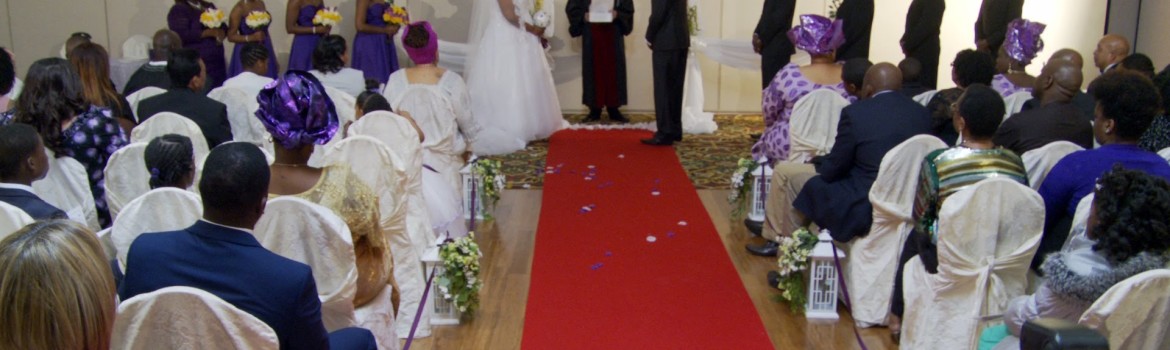
Wedding Ceremony

Bode watched as the celebration came to an end. The eating, drinking and dancing was finally over. In a matter of minutes, an event that took months and millions of Naira to plan was over. Was it worthwhile? Was it reasonable to spend so much on a wedding when, after a few years, disagreements would begin to rock the boat? After all, couples had a tendency to separate after a few years, with complaints that they were not getting what they expected from their relationshipsor citing the popular “irreconcilable” differences. These thoughts raced through Bode’s mind as he imagined the wedding spending culture that he had known almost all his life.

It was typical for people to put a lot of effort into planning their weddings but this town was particularly known for it. The focus was hardly ever on the couple building a life together. It was mostly about meeting certain expectations for the wedding ceremonies; what food was to be available, which musicartistes would perform at the reception and so much more. Basically, the wedding ceremony was more about impressing the wedding guests. The finer and more important details, including the implications of living with a spouse, seemed to be on the back burner, not the front.

Marriage ceremonies in this town were comparable to placing several people in a room, to compete with each other; they were battles to outdo someone else. People benchmarked their wedding ceremonies by standards that they felt would be expected of them by others. Everyone just wanted to impress everyone else. These ceremonies were like shows; the goal seemed to be to look better than someone else; to have a grandiose display. For an outsider, it might be an obvious error in values but in this society it was ingrained in the thinking and it was not considered reasonable to think in a different manner. Even children there learned early that it was important to put up an impressive presentation during a wedding.

Bode’s thoughts were born from his personal experience and they came to mind as he observed the lavish details that had gone into the wedding of his friend, Jide. Bode’s own wedding, though quite expensive, was not as glamorous as Jide’s. A few weeks earlier, Jide had successfully sealed a deal with an oil-services company. The deal had fetched him scores of millions of Naira and so Jide was more than happy to spend a much larger sum of money on his wedding. His bride, Alero, was really decent and homely, as Jide had insisted, but in view of his own personal experience, Bode didn’t think that spending so much on the wedding was reasonable. “It’s once in a lifetime!” Jide had said some days earlier, when Bode cautioned him about the growing expenses. That was a normal expression in the town but Bode no longer saw wisdom in that phrasethat he had known since he was a child.

When Bode got married, the future was not really put into consideration. He had wishes and dreams but there was no clear pathway towards them. His wedding was quite lavish. He made sure that it measured up with what was expected for an executive of his cadre, considering the past weddings of his fellow entrepreneurs. He had taken the plunge into heavy spending because it was just the expectation of everyone. He expected that, like people usually said, the future would take care of itself. The future didn’t do that, unfortunately.

Four years into Bode’s marriage seemed more like ten years of a struggle. Titi, his wife, had been out of work for almost a year. Their first child was ready for school and the fee for his class was quite high, considering the school that they chose. Their second child was a toddler but he had such a large appetite for food and he was fed from only the best baby food brands available. The cost of managing the family was very high. To add tohis troubles, Titi would nag Bode continually, from his inability to provide what she considered a reasonable degree of comfort for the family, to the fact that he spent more time outside the home than ever before, with nothing tangible to show for it. Bode did spend a lot of time outside his home but it was largely because he wanted to be away from the apparently-endless complaints of his wife. Time out with his male friends was an opportunity for him to forget the strains at home.

Bode was almost always broke. It was the usual thing for him to call on his friends for loans before his company received payments for services it had rendered. Sometimes they teased him, asking if his constant borrowing would allow them have enough savings to plan their own weddings. Bode was the only married one among them. Even though he had an expensive wedding ceremony, it now seemed silly to him that his friends would want to spend beyond their means as they planned theirs. If only he had thought carefully before his wedding; maybe he’d have defied the norm and done what was more reasonable.Some weeks before Jide’s wedding, as their clique hanged out for the usual weekend drinks, one of them teased, “Bode, prepare to welcome Jide to the club.” “A club of misery”, Bode thought to himself, as he remembered that Jide didn’t take his advice on cutting down on the wedding expenses.

Jide’s wedding finally came around. Before the end of the celebration at the reception, Bode stood up to dance and was having conversations with his different dance partners. It was his practice to make fresh connections whenever he had the opportunity, because there were always prospects for forming new business relationships at social events. Bode’s wife had left the reception venue for home, as she had to relieve her younger sister who was babysitting the children for her. An elderly man was curious to see that a married man withhis wedding ring clearly seen on his finger was dancing rather irresponsibly. The man made a decision to speak with Bode before he left, as soon as an opportunity arose.

Jide’s wedding ceremony was finally over and the expensive decorations and other props used at the wedding were being removed by some staff from the event planning company. Bode was thinking about the vanity of it all – expensive decorations and props, only for a few hours. Millions spent, just for the sake of creating a great impression for guests; guests who didn’t really matter after all. It was at that point that the elderly man walked up to Bode. He introduced himself as Mr Babalola. “Did madam leave without you?” the man asked Bode. “Yes, she had to go home for something” Bode replied. The man explained his surprise at the manner in which Bode had danced with other women at the wedding, in spite of the fact that he was married. “It’s a long story”, Bode replied. “I have some time” the man responded.

Bode took his time to explain to the man the challenges that he faced in his marriage; his financial challenges, his wife’s diminished regard for him and more. He explained that there had been a strain in the marriage and as a result, neither he nor his wife accorded the other much respect. He went on to state how his fortune had changed shortly after his marriage, contrary to his expectation. He also explained the lavish spending on his wedding ceremony.As he talked about his wife’s weight gain while he was losing weight, his hands started to shake in anger. He also informed Mr Babalola about his in-laws’ continual request for help with their upkeep in spite of their knowledge of his financial situation.

Mr Babalola smiled and shook his head gently. He asked about Bode’s preparation before his wedding, to which Bode elaborated on the plans that he and his wife made for the ceremony and the dreams that they had envisioned for their home; yearly holidays, shopping plans, the children’s education, etc. “You have much to learn”, Mr Babalola told Bode. “Life is like the lifecycle of a butterfly” he said. “It has stages. There is growth over time. You shouldn’t expect so much at earlier stages.” He continued, “Consider how you grew from childhood. Did you immediately start running? You doubtless started with crawling then you started to stand on your feet. When you became stronger and more confident, you started to walk and then started to run, with little struggle until you mastered it and did it without thinking twice. That’s how life is.”

Mr Babalola continued with his lesson to Bode. “In the same way as child development, in marriage, we are all to take small steps and then graduate to bigger ones. Otherwise, we wouldn’t make a lot of progress. Your challenge was in understanding where you were in your growing process. You didn’t consider that marriage would demand more from you financially, as opposed to the time when you were single and that has affected you greatly. You didn’t plan for the proper things. Having money at the outset could help because its lack sometimes brings problems in marriage but it isn’t the most important thing.”Bode was confused. “How do you say in one breath that lack of money can bring problems in a marriage and still say it isn’t the most important thing?”

“Money is either important or not and in my situation it’s obvious that it’s important.” Bode said. He didn’t understand how money could not be a key factor in his challenges, since the majority of the issues in his marriage stemmed from its lack. Mr Babalola realised that he needed to explain further.“For the record, happiness doesn’t start or end with money but one must admit that money helps. Nonetheless, remember that money is finite. It’s a resource that is limited in quantity. If you have a dream of living a rich lifestyle, you should plan to sustain such a lifestyle. You must consider present and future expenses, alongside your income, to be able to do that successfully. You only dreamed of a lifestyle but didn’t think about the implications of that lifestyle, to plan for it.The problem was your planning. I will tell you a story.”

“Ejike and Tola were friends. They were very close. They graduated from the same secondary school and were usually together. Seven years after their graduation, Ejike started a business and within a short time, he became rich. Having made a lot of money early in life, he reasoned that the next step was to get married. On the other hand, Tola’s business yielded very little but he made do with it. Over time, especially because of the distance between them, Ejike and Tola saw and communicated with each other less often.”

“Ejike thought he would never experience misfortune. His business was in importation and sale of all sorts of drinks; alcoholic and non-alcoholic; high-end and low-end brands. He chose to stick with what he believed was a winning business and business formula. When advised to diversify his operations, his usual response was, “Ndi mmadu ga na anwu mmaya, ma mmaya diri…ma ahia na aga aga”implying that people would keep drinking once there was alcohol and so business would keep growing.Everything Ejike did was in grand style. His wedding, home, cars, his children’s education; everything he was associated with was exquisite. Sadly, things didn’t continue that way for long. Ejike’s competitors swiftly took over most of his business clients, offering better prices and other incentives. He was unable to pay his staff regularly and they started sabotaging his business by short-changing him and stealing his products. In the end, he accumulated so much debt that he sold his luxury cars and the mansion that he lived in. He also sold the two plots of land that he owned.”

“Ejike eventually died after he suffered a stroke. He had become hypertensive, following his severe loses. His wife was a housewife and so she was unable to complement his income. Ejike had managed to buy a tricycle with which he engaged a hired driver in commercial transportation after he had sold his vehicles but the arrangement was a disaster, as he experienced many loses all through his engagement with the driver. Every week, there was always at least a case of trouble with the police, traffic officers, repairs or some other issue. “What happened to Tola?” Bode askedMr Babalola. “Tola realised the reasons for his slow business growth and worked hard at increasing his income. He got married five years after Ejike but he was better prepared. He eventually had four children and obtained a PhD after a short while.”

“Do you know the difference between the two friends?” the man asked Bode. “Planning, I guess!” he responded. Mr Babalola smiled. “One was organised but the other wasn’t. Tola had a vision and planned towards it but Ejike was short-sighted. Ejike expected that his circumstances would not change and so he didn’t plan. He just consumed all that came his way. Son, whatever you have before marriage will be as nothing after marriage if you don’t plan for the future. There are many other issues though and as challengescome your way; financial and otherwise, you would have to be patient with the behaviour of your spouse and you’d have to do your best to bring out the best in them. After everything,you’ll find it will be worthwhile. You complained about your wife gaining weight while you lost weight. Women tend to gain weight after marriage. It happens with men too. It’s a fact you have to live with. Exercise and good diet practices help but there’s that tendency.”

“Could Ejike’s and Tola’s story be real?” Bode finally asked Mr Babalola. “Of course; it happens all the time. Young man, think about these things, while there is still time to better your situation.” Mr Babalola stood up to leave. He shook Bode’s hand. “All the best son.”Bode was happy to shake his hand back; he had been armed with very important information. “Thank you very much, sir”, Bode said. Mr Babalola smiled happily as he walked away. One of the ladies who Bode had danced with earlier walked up to him and asked, “What did Prof.say to you?” “Who?” Bode asked. “The influential Prof. Omotola Olusegun Babalola; the old man you were chatting with…What did he say to you? He’s always giving people advice”. “Oh him?” Bode responded, as he stood up to leave. “You didn’t ask for my phone number” she said. “That’s true”, Bode replied, as he began to walk away. “I have to leave now”. “Is this how you would treat a lady? You didn’t even allow us get introduced” she responded. “I’m sorry”, he replied. “I’m Bode Adetiloye, a happily-married man and father of two. I need to get home to my wife. What’s your own name?” “Ah!” she responded, angrily. “Prof. has done it again!”


Written

By

Ikenna I. Anyadike


Edited by

Chukwudifu Onianwa of ChuDifu Projects